GENIUS Act's impact on stablecoin regulations after one year
GENIUS Act introduced the first federal stablecoin statute in the US, but regulatory rules are still being developed over a year later.
 Simon Belanger 5 min read
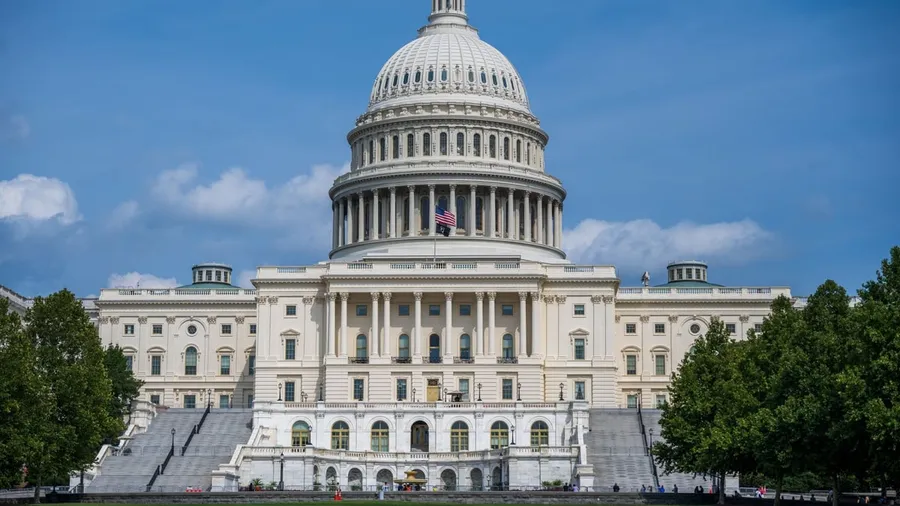
Stablecoins spent most of a decade as infrastructure without a legal category, moving vast sums across borders while regulators argued over whether they were securities, commodities, deposits, or something the statute books had not anticipated. The GENIUS Act ended that argument in the United States, at least on paper. What it has not yet done, more than a year after being signed, is take effect.
What the statute actually requires
President Trump signed the Guiding and Establishing National Innovation for U.S. Stablecoins Act on July 18, 2025, after it cleared the Senate 68 to 30 and the House 308 to 122. The law defines a “payment stablecoin” and a closed class of entity permitted to issue one: a subsidiary of an insured depository institution, a federally qualified nonbank issuer approved by the Office of the Comptroller of the Currency, or a state-qualified issuer under a state regime the Treasury deems acceptable. A state-qualified nonbank issuer whose outstanding issuance passes ten billion dollars has 360 days to move to OCC oversight or stop issuing new coins until it falls back below the line.
The reserve rules are the heart of it. Every payment stablecoin must be backed at no less than 100 percent of its outstanding value, and the permitted assets are deliberately narrow: US dollars, short-term Treasury bills, and a small set of comparably liquid instruments approved by regulators, with corporate bonds, longer-duration paper, and other crypto assets excluded. Reserves must sit in segregated, bankruptcy-remote accounts at qualified custodians, with monthly public disclosure of their composition certified by the issuer’s chief executive and chief financial officer. Issuers count as financial institutions under the Bank Secrecy Act, must be able to freeze or burn tokens on lawful order, and may not imply their coins are government-backed or federally insured. If an issuer fails, holders rank ahead of other creditors.
The provision that reshaped business models
One clause has done more to rearrange the industry than the reserve schedule. Section 4(a)(11) bars a permitted issuer from paying holders any form of interest or yield, in cash or tokens, purely for holding the coin. The reasoning is in the name: Congress was legislating a payment instrument, not a deposit substitute.
The fight since has been about indirect payment. Issuers earn on their Treasury reserves, and nothing in the statute obviously stops them routing that economics to an affiliated exchange that rewards the same users. The OCC’s proposed rule goes further than the text, presuming a violation where an issuer has an arrangement with an affiliate or related third party to pay such yield. Whether that survives comment will decide how much of the revenue-sharing between issuers and the platforms listing them can continue.
A rulemaking calendar that slipped
The Act gave federal agencies until July 18, 2026 to complete the required rulemakings, with the statute taking effect on the earlier of January 18, 2027 or 120 days after final rules issue. That deadline arrived with no final rules in place. The OCC published its proposed framework on March 2, 2026, and Treasury followed with principles for judging state regimes against the federal one and, on August 17, 2026, a rule defining who may issue and sell stablecoins. All of it remains in comment, so the effective date defaults to the statutory backstop of January 18, 2027.
What the market did in the meantime
Legal certainty arrived before the rulebook, and the market responded to it. A Federal Reserve staff analysis published in April 2026 put aggregate stablecoin market capitalization at roughly 317 billion dollars, more than 50 percent above early 2025, while noting growth flattened through the last quarter of 2025 and the first of 2026. It also found Ethereum stablecoin volumes rose by half after the legislation, and drew the distinction the Act is designed to erase: USDC fully backed by higher-quality reserves, USDT at roughly 1.04 times reserves per coin but only about 0.74 in assets the law would count.
Issuers repositioned accordingly. Circle has pursued a New York limited-purpose trust company charter for USDC while keeping a federal pathway open. Tether, incorporated outside the United States, launched a separate compliant coin, USAT, through the OCC-chartered Anchorage Digital Bank rather than retrofitting its flagship.
Foreign issuers and cross-border flows
Section 18 lets the Treasury designate foreign jurisdictions whose stablecoin regimes it considers comparable, exempting issuers based there from the general licensing prohibition. Those issuers must still register with the Comptroller and hold US-based reserves sufficient to meet American customers’ liquidity demands. Reporting through mid-2026 indicated no jurisdiction had yet received such a determination.
The deadline that matters for cross-border flows is Section 3(b)(1), which from July 18, 2028 bars digital asset service providers from selling non-compliant stablecoins at all: a three-year runway for the global market to sort itself into coins distributable through US-touching venues and coins that are not. The near-term effect on payments businesses is quieter and more useful: a coin from a licensed issuer now has recognized federal status, which changes how banks treat it where an off-ramp meets a bank account.
What it means for a Canadian holder
Canada did not wait for Washington to finish. Bill C-15, the Budget Implementation Act, 2025, No. 1, received Royal Assent on March 26, 2026 carrying the Stablecoin Act, Canada’s first federal framework for fiat-backed stablecoins. It takes the same basic position as the GENIUS Act (a stablecoin is a regulated payment instrument, not a security) and puts the Bank of Canada in the supervisory seat, running a public registry of approved issuers with powers to compel information, impose conditions, and recommend prohibitions to the Minister of Finance. Issuers must hold unencumbered reserves equal to outstanding value with qualified custodians and offer at-par redemption. Regulations are still being drafted, with the framework expected in force in 2027.
Until then, the rule that actually binds Canadian holders is provincial securities law. Under the CSA’s value-referenced crypto asset regime, a registered Canadian platform may only list a stablecoin whose issuer has given an undertaking to the regulators, which is why Circle’s USDC has been listable here since December 2024 and why Coinbase and Crypto.com removed USDT for Canadian users. Canada has run a stricter listing filter than the United States for longer, and the GENIUS Act is now pulling American distribution toward a similar shape. For anyone holding a dollar stablecoin in a Canadian account, the questions are narrow: who the issuer is, which regulator it answers to, and whether the coin still has a legal path onto that platform in 2027 and 2028.