Tokenized assets reach $33.5 billion as finance evolves
Tokenized real-world assets hit $33.5 billion by mid-2026, with major institutions integrating tokenized securities into regulated markets.
 Dylan Foster 5 min read
Tokenized real-world assets, ownership of things like government bonds, private credit or gold represented as tokens on a blockchain, spent years as a concept crypto companies pitched to skeptical financial institutions. In 2026, the institutions stopped being skeptical and started building.
The growth numbers
By early July 2026, on-chain distributed value tracked by industry aggregator rwa.xyz had climbed to roughly $33.5 billion, with a representative underlying asset value near $388.5 billion once the full scope of tokenized products is counted. The tokenized RWA market, excluding stablecoins, reached around $29 billion in total on-chain value in the first quarter of 2026, compared to roughly $7.9 billion in 2024, a 263% increase year over year. Separate tracking describes the sector growing approximately 66% in 2026 alone, driven by tokenized treasuries, private credit, and increasing institutional demand.
What tokenization actually does for a bond or a fund
The appeal of tokenizing an already-liquid, already-regulated instrument like a Treasury bill or a money market fund share is less about creating a new asset than about changing how ownership of an existing one is recorded and moved. A conventional securities transaction settles through a chain of intermediaries, a broker, a custodian, a central clearing counterparty, each maintaining its own ledger and reconciling with the others on a periodic cycle, historically taking a business day or more to fully settle. Representing the same underlying claim as a token on a blockchain collapses much of that reconciliation into a single shared ledger, in principle allowing near-instant settlement and continuous, around-the-clock trading rather than settlement cycles bound to conventional market hours. For an institution moving large sums or needing collateral to shift between platforms quickly, that speed and continuity is the actual value proposition, distinct from any change to what the underlying bond or fund itself is.
Government bonds lead the way
Tokenized US Treasuries ended the first quarter of 2026 as the largest tokenized asset class and the fastest-growing segment of the quarter, with total value surpassing $10 billion in late February and reaching $13.4 billion by early April. That pattern reflects where institutional capital naturally gravitates first: instruments that already fit within existing institutional workflows, government securities, money market funds, private credit, and increasingly gold-backed commodities, rather than more novel or illiquid asset classes.
The institutions moving in
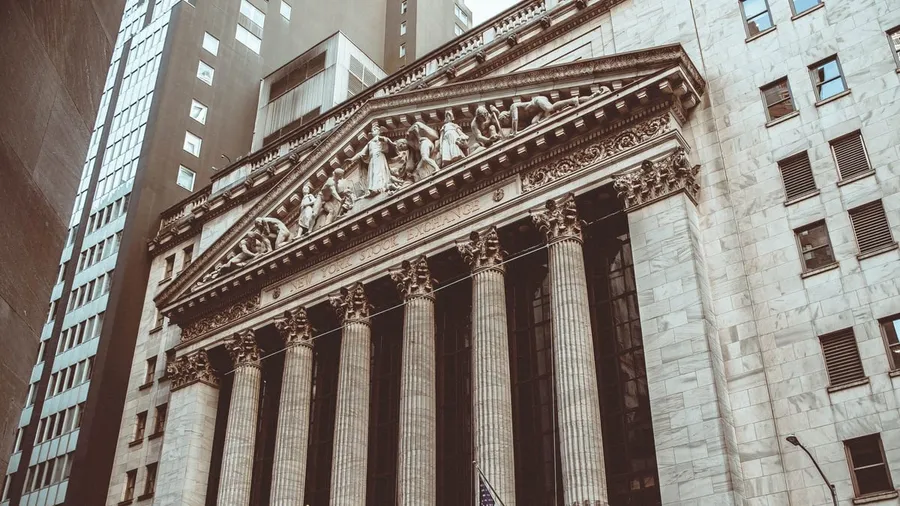
What distinguishes 2026 from earlier tokenization pilots is who is now involved and at what level. The first quarter of 2026 brought infrastructure-level commitments from the institutions that run global capital markets, with Nasdaq, the New York Stock Exchange, and the Depository Trust & Clearing Corporation all moving toward integrating tokenized securities into the existing architecture of regulated markets, rather than running tokenization as a side experiment disconnected from their core infrastructure.
The custody and legal questions that remain
None of that settlement-speed advantage removes the underlying legal and custody questions a tokenized security still has to answer. A token representing a Treasury bill or a fund share is only as good as the legal structure connecting it to the actual asset, meaning the custodian or transfer agent responsible for the real-world instrument, the enforceability of a token holder’s claim if that intermediary fails, and the jurisdiction whose law governs a dispute if something goes wrong. These are not new questions invented by blockchain technology; they are the same questions that apply to any securities intermediation structure, but tokenization adds a layer of technical infrastructure, smart contracts, custodial wallets, bridge mechanisms between different blockchain networks, that itself introduces new points where something can fail. Regulators and infrastructure providers moving into this space in 2026 have generally been explicit that the legal character of a tokenized security does not change simply because it is represented on a blockchain; a tokenized Treasury bill is still a Treasury bill for regulatory purposes, and the protections and risks that come with holding it depend on the same underlying legal structure as its non-tokenized equivalent, not on anything the token format adds by itself.
Why this differs from earlier crypto hype cycles
Analysts covering the sector caution that headline growth numbers can overstate how broad the shift really is; one assessment concludes that, of the many asset classes discussed for tokenization, only one, tokenized treasuries and similarly liquid, already-regulated instruments, is genuinely ready for prime time at institutional scale in 2026. More exotic tokenized assets, real estate or private equity for example, remain earlier-stage. That distinction matters for anyone reading RWA growth statistics: the boom so far is concentrated in the most conventional, already-liquid asset classes, not evenly spread across everything that could theoretically be tokenized. Real estate and private equity face a harder version of the same custody and legal questions that already apply to Treasuries, compounded by the fact that those underlying assets are themselves illiquid and hard to value on any continuous basis, meaning a token representing a fractional interest in a building inherits all of that underlying illiquidity even while trading on a blockchain that never closes. Tokenizing the wrapper doesn’t manufacture liquidity in the asset it wraps.
What it means going forward
For crypto markets broadly, sustained institutional participation in tokenized treasuries and money market products provides a source of on-chain activity that doesn’t depend on retail speculation or token price cycles, a structural difference from most previous crypto growth narratives. It also means that as regulated exchanges like Nasdaq and the NYSE build tokenization directly into their infrastructure, the line between “traditional finance” and “crypto infrastructure” is becoming less distinct at the institutional level, even where retail-facing products haven’t changed much yet.
That convergence cuts in both directions. Crypto infrastructure, public blockchains, smart contracts, digital wallets, gains legitimacy and liquidity by being adopted for mainstream financial plumbing rather than remaining a parallel system used mostly for speculative trading. At the same time, traditional financial institutions gain a genuinely new capability, near-instant settlement and continuous trading for instruments that have historically operated on slower, market-hours-bound cycles, without having to abandon the regulatory and custodial frameworks their business already depends on. Whether that convergence eventually extends meaningfully into retail products, letting an ordinary investor hold a tokenized Treasury the way they’d hold a money market fund today, is a separate question from whether the institutional infrastructure for it exists, and 2026’s growth has been overwhelmingly on the infrastructure side of that divide rather than the retail-facing one.