Understanding hot, cold, and hardware crypto wallets
Hot wallets are internet-connected, while cold wallets, including hardware wallets, store keys offline. Learn which wallet best fits your crypto usage.
 Jordan Fraser 5 min read
Match a wallet setup to how you use crypto
There is no universally best wallet. Answer four practical questions to see which trade-off fits the use case.
This is an educational decision aid, not a product recommendation. Test recovery with a small amount before relying on any setup.
The terms hot wallet, cold wallet and hardware wallet get used almost interchangeably in casual conversation, but they describe different things: one is a general category, one is its opposite, and the third is a specific type of device. Understanding the distinction is the difference between a setup that matches how someone actually uses crypto and one borrowed from a tutorial that doesn’t fit; our practical crypto guides cover the wider basics.
Why the terminology gets muddled
Part of the confusion comes from how the terms are used in everyday conversation versus how they’re defined technically. People sometimes use “cold wallet” and “hardware wallet” interchangeably, which is close enough in practice since hardware wallets are by far the most common form of cold storage, but a paper wallet or an air-gapped offline computer used purely to generate and store keys is also technically cold storage without being a hardware wallet in the commercial-product sense. Similarly, “hot wallet” gets used to describe both a self-custodied mobile app and a custodial exchange account, even though those two differ enormously in who actually controls the underlying keys, a distinction covered in more detail below.
What a wallet actually holds
No wallet, hot or cold, physically stores coins. A blockchain’s ledger records which address holds which balance; a wallet stores the private key that proves control of an address and lets its owner sign transactions moving funds out of it. Losing the private key means losing the ability to move those funds, permanently, regardless of what the blockchain’s public record still shows.
Hot wallets: connected and convenient
A hot wallet is any wallet whose private keys are generated, stored or used on a device connected to the internet, a phone app, a browser extension, or an exchange’s own custodial wallet. That connectivity is what makes hot wallets fast to use for everyday transactions, and it’s also the attack surface: malware, phishing sites and compromised apps target internet-connected keys because they’re reachable remotely. A hot wallet is a reasonable place for an amount someone is actively using or willing to lose; it’s a weak place to park long-term savings.
Custodial versus non-custodial: a separate axis
Hot and cold describe whether keys touch the internet. A second, independent question is who actually controls those keys, custodial or non-custodial. A custodial wallet, the kind built into most exchanges, holds the private keys on the user’s behalf; the user has an account balance and trusts the exchange to manage the underlying keys correctly and to honour withdrawal requests. A non-custodial wallet, whether hot or cold, gives the user direct control of their own private keys, with no third party able to freeze, move or restrict access to funds. The two axes combine independently: an exchange balance is hot and custodial; a mobile app wallet is typically hot and non-custodial; a hardware wallet is cold and non-custodial. The saying “not your keys, not your coins” is a shorthand for this distinction, capturing the fact that a custodial balance is ultimately a claim on the exchange, not direct ownership of the underlying asset, and is only as secure as the exchange’s own solvency and security practices.
Cold wallets: offline by design
A cold wallet keeps private keys on a device or medium that never connects to the internet, eliminating remote attack vectors entirely. The simplest form is a paper wallet, keys printed or written down and stored physically; the more durable and widely used form today is a dedicated hardware wallet.
Hardware wallets: cold storage with a interface
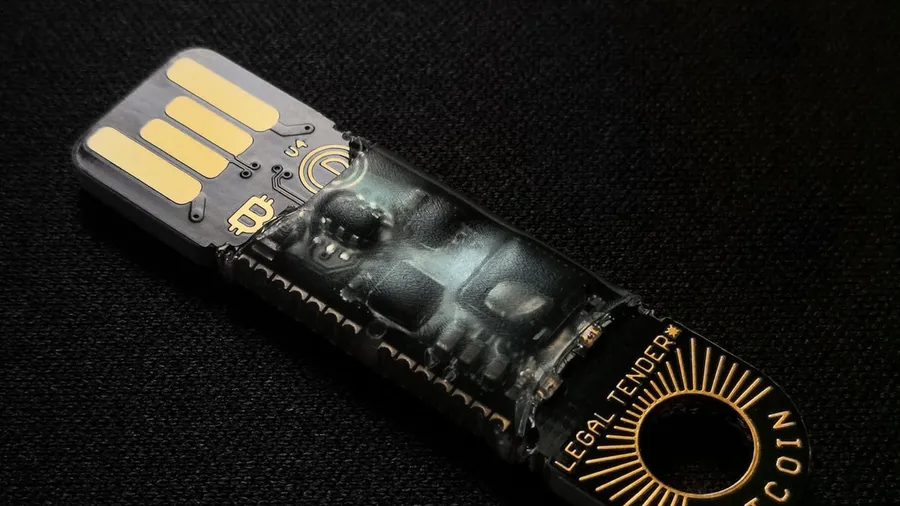
A hardware wallet is a small physical device purpose-built to generate and store private keys offline and to sign transactions without ever exposing those keys to a connected computer or phone. The device displays transaction details on its own screen and requires a physical button press to approve a signature, so even a compromised computer can’t silently authorize a transfer. Setup produces a seed phrase, typically 12 or 24 words, which is the actual backup of the wallet; the device itself is replaceable, the seed phrase is not. Best practice is recording that phrase on a durable physical medium, engraved metal is now common, rather than a screenshot or a cloud note, and never entering it into any website or app, since no legitimate hardware wallet or platform will ever ask for it.
Common mistakes that undermine either type
Even a well-chosen wallet type can be defeated by poor handling. On the hot-wallet side, the most common failure is approving a transaction without reading what it actually authorizes, particularly with browser-extension wallets interacting with DeFi applications, where a malicious or compromised site can request a signature that grants far broader spending permission than the user intends. On the cold-wallet side, the most common failure isn’t a hack of the device itself but poor handling of the seed phrase: photographing it, storing it in a notes app or cloud drive, or typing it into a phishing site disguised as an official wallet recovery tool. A hardware wallet’s security model assumes the seed phrase stays offline and private; once it doesn’t, the offline device offers no protection at all, since anyone with the phrase can recreate the wallet and its keys on any other device.
Recovery and what happens if a device is lost
A hardware wallet failing, being lost or being destroyed doesn’t mean losing the funds it protected, provided the seed phrase was recorded correctly and kept safe. Because the seed phrase mathematically generates the wallet’s private keys rather than the device generating and storing them independently, that same phrase can be entered into a new hardware wallet, or compatible software wallet, to restore full access to the original funds. This is precisely why the seed phrase, not the device, is the actual root of a hardware wallet’s security, and why losing the seed phrase while still holding a working device is just as catastrophic as losing the device while having no backup of the phrase: either failure alone breaks the recovery chain.
Choosing a split, not a single answer
For most people the practical answer isn’t hot or cold, it’s both, split by purpose. A hot wallet or exchange balance covers spending, trading and amounts actively in use. A hardware wallet covers savings, holdings not being touched day to day, where the inconvenience of offline signing is a feature rather than a cost. The split scales with the amount involved: the more an amount would hurt to lose, the stronger the case for moving it into cold storage. Someone actively trading small amounts week to week may reasonably keep most of their balance on an exchange or in a mobile wallet; someone holding a position intended to be untouched for years has little practical reason to keep it anywhere other than cold storage, where the main ongoing task is simply keeping the seed phrase safe and, ideally, backed up in more than one physical location in case of fire, flood or theft.