Bitcoin's 20% Rally Now Rests on a Senate Vote
Bitcoin surged past $77,000 on hopes for the US Clarity Act, but the bill still faces a 60-vote procedural hurdle that only opens debate.
 Bradley Hughes 6 min read
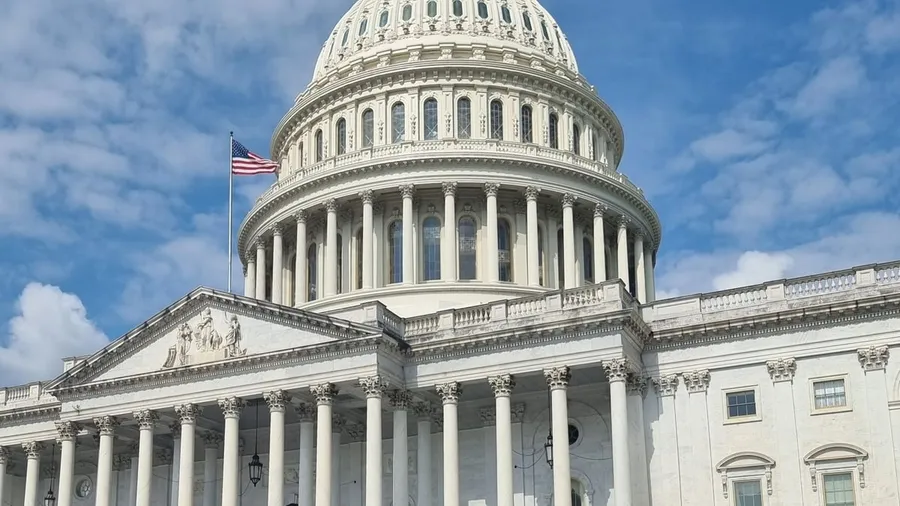
Bitcoin posted its sharpest weekly advance of 2026 last week, and the reason was not a technical breakout or a corporate treasury purchase. It was a bill that has not passed, and whose next test is a procedural vote scheduled for September 15.
What moved the price
The rally began on August 19, when President Donald Trump met at the White House with executives from firms including Coinbase and Ripple, alongside the heads of the Securities and Exchange Commission and the Commodity Futures Trading Commission. Reuters reported that Trump afterwards told reporters Congress should take the next step on the Clarity Act, the industry’s priority legislation, which would settle whether individual digital assets are regulated as securities or commodities.
A second, less-discussed catalyst arrived the same week. The US Treasury announced it would double the size of its buyback operations for long-duration debt, a move that pushed bond yields lower and lifted appetite for risk assets generally. By August 20, Reuters had bitcoin at $71,505, up 3.48% on the day and above $70,000 for the first time since June.
The move accelerated from there. BNN Bloomberg, carrying AFP copy, reported bitcoin climbing 6.9% on August 21 to US$77,675.94, its highest level since May and a gain of more than 20% since the Wednesday. It was the third consecutive session in which bitcoin rose more than 5%. Bret Kenwell, a US investment analyst at eToro, attributed the move to a revived sense that Washington was finally making headway on crypto policy, and said declining Treasury yields and the forced closing of short positions amplified it.
What the Clarity Act would actually change
The bill’s significance is regulatory rather than monetary. For years, the core unresolved question hanging over the US crypto industry has been which federal agency has jurisdiction over which token: the SEC, which regulates securities and applies disclosure and registration rules built for stocks and bonds, or the CFTC, which regulates commodities and derivatives markets and applies a lighter, exchange-focused framework. Bitcoin has generally been treated as a commodity, closer to gold than to a share of stock, but thousands of other tokens have sat in a gray zone, with the SEC arguing in various enforcement actions that many of them meet the legal test for a security while issuers and exchanges argued the opposite. The Clarity Act is an attempt to settle that jurisdictional split in statute rather than case by case in court, giving exchanges, issuers and custodians a fixed rulebook to build compliance programs around instead of guessing which agency might act against them next. That is why the industry has treated it as priority legislation: it is less about any single asset’s price and more about removing years of legal uncertainty that has kept some institutional capital on the sidelines.
The flows followed the headlines
Institutional money moved in behind the price. According to The Block, US spot bitcoin ETFs took in $1.9 billion in net inflows over the week, part of a $2.6 billion combined haul with ether funds that marked the strongest weekly showing since October 2025. Trading volume in the bitcoin funds jumped to $22.1 billion from $6.9 billion the prior week, and net assets under management rose 25.4% to $96.1 billion. BlackRock’s IBIT alone absorbed $503 million on the Thursday.
One number in that same data set deserves equal weight. The Block also reported that US spot bitcoin ETFs remain at roughly $2.9 billion in net outflows for 2026 to date. One exceptional week did not reverse the year.
That gap between a single strong week and the year-to-date figure is a useful reminder of how ETF flow data should be read. A spot bitcoin ETF’s assets under management move for two separate reasons that get reported together but mean different things: net new money flowing in or out, and the change in bitcoin’s own price, which mechanically changes the dollar value of holdings the fund already has regardless of whether anyone bought or sold shares that day. A week combining a sharp price rally with genuine net inflows, as this one did, produces the kind of AUM jump that looks dramatic in isolation but does not by itself tell you whether the underlying trend for the year has actually turned.
What September 15 actually decides
The vote itself is narrower than the rally implies. Senate Majority Leader John Thune filed cloture on the motion to proceed to H.R. 3633 shortly before the chamber adjourned on August 8, setting the vote for September 15. Cloture requires 60 votes, and clearing it would only open debate on the bill. It would not pass it.
The 60-vote threshold exists because of the Senate’s filibuster rule, which allows extended debate on most legislation to continue indefinitely unless a supermajority votes to cut it off. In a chamber currently split closely along party lines, that means a bill cannot advance on a simple majority vote alone; it needs support from senators outside the majority party, or unanimous support within it, to even begin formal debate. Clearing cloture on the motion to proceed only allows the Senate to start considering amendments and eventually hold a final passage vote, which itself could require further procedural votes depending on how debate is structured. A bill can clear the August 8 cloture hurdle and still fail, stall, or be substantially rewritten before any final vote, which is why market participants treating September 15 as a binary yes-or-no moment for the legislation’s fate are, in practice, pricing in an earlier and narrower step than final passage.
Getting to 60 is not assured. American Banker reported that Thune blamed Democratic senators for blocking a pre-recess vote, while at least two Republicans had their own objections: Josh Hawley of Missouri and Jerry Moran of Kansas both raised concerns tied to stablecoin-yield provisions and their effect on community banks. Senator Cynthia Lummis, a sponsor, was described as working with leadership to resolve the outstanding issues.
The community-bank objection is a substantive one rather than a procedural sticking point, and it illustrates why crypto legislation in the US tends to move slowly even with industry support and a receptive administration. Provisions allowing stablecoin issuers to pass yield on reserves to holders touch directly on how community banks compete for deposits, since a stablecoin offering a competitive yield with instant liquidity could pull deposit funding away from smaller banks that rely on that funding to make loans locally. Resolving that kind of cross-industry disagreement generally requires negotiated carve-outs or amendments rather than a straight party-line vote, which is consistent with reports that a sponsor of the bill was still working to resolve outstanding issues after the cloture motion had already been filed.
The Canadian exposure
None of this is voted on in Canada, but Canadian portfolios carry the outcome. The Purpose Bitcoin ETF, listed on the Toronto Stock Exchange since February 23, 2021 as the world’s first spot bitcoin fund, held roughly CAD $2 billion in assets as of August 21, 2026 according to its issuer. Those units track the same spot price that a Washington floor vote is now expected to move.
Reuters also quoted analysts urging caution on the rally’s composition. Alex Kuptsikevich of FxPro attributed much of the advance to short-covering after a stretch of narrow trading, and Bo Pei of US Tiger Securities called Trump’s comments only incrementally positive for the legislation’s odds. As of August 20, Reuters noted bitcoin remained down about 18% for the year and roughly 43% below its October record.