US Senate vote on crypto CLARITY Act stalls progress
US Senate fails to advance the Digital Asset Market CLARITY Act, impacting crypto regulation clarity and oversight mechanisms.
 Ryan Mitchell 3 min read
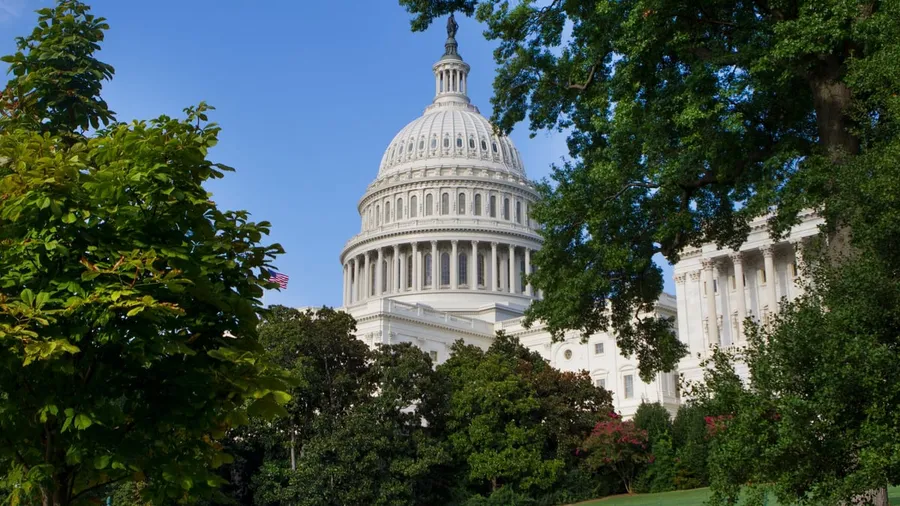
US Senate’s recent vote stalls crypto regulatory progress
On March 15, 2023, the US Senate failed to advance the Digital Asset Market CLARITY Act, which aimed to clarify the regulatory frameworks for cryptocurrencies. The necessary 60 votes to move the bill forward were not met, indicating a continued stalemate in cryptocurrency regulation.
This vote was not explicitly about passing the bill but rather advancing it toward a final decision. Since the Senate did not reach the required threshold, discussions will persist, potentially delaying any concrete regulatory measures that the bill intended to establish.
Provisions of the CLARITY Act
The CLARITY Act aims to delineate the roles of the Commodity Futures Trading Commission (CFTC) and the Securities and Exchange Commission (SEC) in the regulation of digital assets. A key component of the bill is the introduction of the term “ancillary assets.” These are network tokens whose value may be influenced by managerial or entrepreneurial efforts but are classified as commodities.
In an environment fraught with regulatory ambiguity, distinguishing between commodities and securities is critical. The CLARITY Act seeks to resolve some of this confusion by outlining clear requirements for disclosures linked to ancillary assets.
Focus on decentralized finance and platforms
The legislation also addresses significant issues associated with decentralized finance (DeFi). One of the proposed changes involves requiring CFTC registration for certain activities linked to digital commodities executed on centralized DeFi platforms. This aspect has garnered attention as it targets protocols that may not be entirely decentralized but still hold identifiable parties in control.
Moreover, the regulation extends to companies that facilitate cryptocurrency trading for the average American. The CLARITY Act aims to put exchanges, brokers, and dealers under a well-defined federal registration and oversight framework, addressing gaps often leveraged by bad actors in the industry.
Implications for Canadian Investors
For Canadian investors, the implications of the CLARITY Act’s failure to advance may resonate, particularly given the interest in establishing a solid regulatory landscape for cryptocurrency. Canadian regulators, including the Canadian Securities Administrators (CSA) and the Investment Industry Regulatory Organization of Canada (IIROC), closely monitor developments in global cryptocurrency regulation.
The intertwined nature of the Canadian and American markets suggests that regulatory frameworks could influence one another. With the CLARITY Act stalled, Canadian investors may encounter continued volatility in the crypto market, stemming from ongoing legislative uncertainty in the US.
A look at the regulatory landscape
The regulatory backdrop for cryptocurrencies is critical for understanding market dynamics. In Canada, cryptocurrency is regulated by bodies such as the Financial Transactions and Reports Analysis Centre of Canada (FINTRAC) and the CSA, aiming to combat money laundering and protect investors.
These regulators have been progressively defining rules based on international standards. For instance, FINTRAC has mandated that cryptocurrency exchanges register and comply with anti-money laundering regulations. Similarly, the CSA’s regulatory framework aims to ensure that token offerings and cryptocurrency exchanges are registered as per the law.
The lack of progress on the CLARITY Act illustrates the challenges faced in the broader quest for a coherent regulatory response in both Canada and the US. With ongoing discussions, it remains crucial for investors and stakeholders to stay informed about developments in this rapidly evolving sector.
The path ahead for cryptocurrency regulation
As discussions on the CLARITY Act continue, stakeholders across the cryptocurrency space will be observing the developments closely. The potential establishment of clearer regulatory guidelines is increasingly important to foster a secure trading environment and promote innovation.
Despite the recent setback, calls for comprehensive regulation suggest that legislators recognize the importance of governance to protect investors and ensure market stability. For Canadian investors, the future of cryptocurrency regulation will likely depend on the outcomes of the evolving scenarios in both the US and Canada.