CLARITY Act awaits procedural vote in Senate on September 15
The CLARITY Act, aiming to clarify crypto asset regulation, awaits a procedural Senate vote on September 15, maintaining its legislative momentum.
 Ryan Mitchell 5 min read
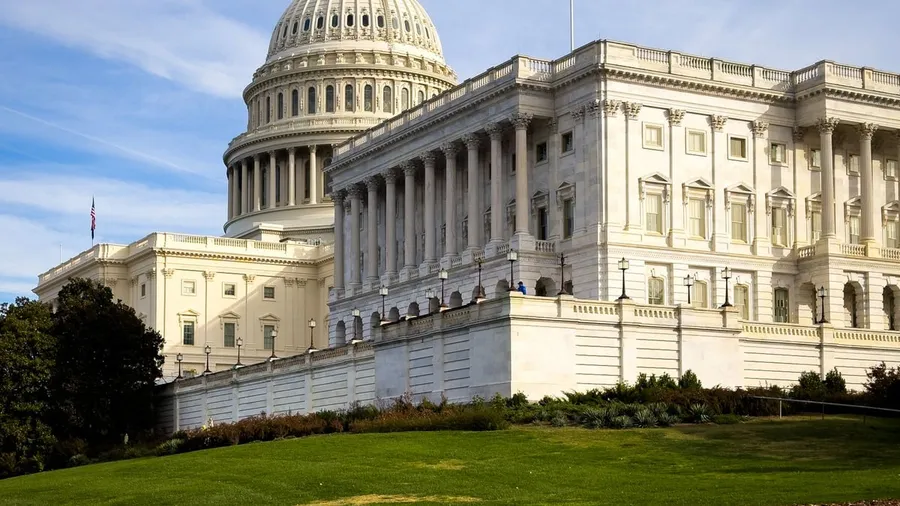
The most consequential piece of US crypto legislation currently in play did not get a floor vote before the Senate left town. It did not die either. The Digital Asset Market Clarity Act, generally known as the CLARITY Act, sits on the Senate docket with a procedural vote already scheduled for the week lawmakers return.
Where the bill stands
The CLARITY Act cleared the Senate Banking Committee in May 2026 on a 15-9 vote, with support from members of both parties. That margin matters: a bipartisan committee vote is the kind of signal that usually precedes a floor vote within weeks, not months. It did not happen that way. The Senate spent its remaining pre-recess floor time on other priorities and adjourned on August 8, 2026, without taking the bill up.
What kept the bill from slipping off the calendar entirely was a procedural move made just before the recess began. Majority Leader Thune filed cloture on the motion to proceed to the legislation. In practical terms, that is a placeholder: it does not advance the substance of the bill, but it does formally queue up the first of the procedural votes required to bring it to the floor, and it preserves the bill’s position rather than sending it back to the end of the queue.
The Senate reconvenes on September 14, 2026. A vote is scheduled for Tuesday, September 15.
What the legislation would do
The CLARITY Act is a market structure bill, which is a narrower thing than a general crypto law. Its central function is to divide regulatory jurisdiction over crypto assets between the two federal agencies that have spent years disputing which of them holds it: the Securities and Exchange Commission and the Commodity Futures Trading Commission.
That division is the whole point. For most of the past decade, whether a given token or platform falls under securities law or commodities law has been settled one enforcement action at a time, with the answer often arriving years after the business decision that depended on it. A statutory framework assigning categories of digital assets to one regulator or the other would replace that case-by-case litigation with a set of rules written in advance. Firms would know which agency registers them, which rulebook applies, and what compliance obligations attach before they launch a product rather than after.
Why the SEC-CFTC split has taken years to resolve
The jurisdictional dispute the CLARITY Act is trying to settle did not appear suddenly. It stems from a basic feature of US financial law: securities and commodities are regulated under separate statutory regimes, with different registration requirements, different disclosure obligations and different enforcement tools, and crypto assets do not map cleanly onto either category. A token that functions like a commodity in some respects and is sold in a manner that resembles a securities offering in others has, in past enforcement actions, been treated as one or the other depending on which agency acted first and which court reviewed the case. That approach has produced years of inconsistent outcomes: some tokens have been treated as securities in one enforcement context and not in another, exchanges have faced action from one regulator while operating a product line the other regulator had not objected to, and firms building new products have had no reliable way to know in advance which set of rules would eventually apply to them.
A market structure bill addresses that by assigning categories of digital assets to a regulator in statute, rather than leaving the assignment to be worked out case by case in litigation. The CFTC’s jurisdiction has traditionally covered commodities and derivatives markets, with a lighter-touch registration regime relative to the SEC’s securities framework, which is built around investor-protection disclosure requirements designed for equity and debt offerings. Where a given digital asset lands between those two regimes determines which set of obligations a platform listing it, and an investor trading it, actually faces.
The disagreement holding it up
The delay is not procedural bad luck. It reflects a substantive split over what belongs in the bill.
Democrats have pushed for stronger provisions on ethics and conflicts of interest, along with more robust illicit-finance safeguards, arguing that a market structure framework without those guardrails hands the industry regulatory certainty while leaving the harder problems unaddressed. Republicans have pressed for passage on the grounds that the clarity itself is the urgent deliverable, and that markets and firms building in the US need a settled framework to operate against.
Both positions describe real stakes, and neither has been abandoned. The September vote will be a first test of whether enough of that gap has been closed during the recess to get the bill through its procedural hurdles, or whether the same disagreement simply resurfaces on the floor.
Why cloture matters procedurally
The cloture filing that kept the bill alive over recess is worth explaining on its own, since it is easy to skip past as a technicality. In the Senate, most legislation cannot simply be brought to a final vote by majority request; a motion to proceed to debate a bill can be extended indefinitely absent a supermajority vote to cut off debate, which is what cloture does. Filing cloture on the motion to proceed, before the bill has even reached the floor for substantive debate, is a way of starting that clock without requiring the floor time a full debate would consume. It does not resolve the underlying disagreement over ethics provisions and illicit-finance safeguards described above; it simply ensures the bill retains a scheduled procedural step to clear, rather than needing to be reintroduced or renegotiated onto the calendar from scratch when the Senate reconvenes. That distinction, between a bill that has to fight for calendar time and one that already has a scheduled vote, is part of why the August cloture filing was treated as meaningfully different from simply letting the bill lapse over recess.
What to watch on September 15
The scheduled vote is procedural rather than final. Clearing it would move the bill toward floor consideration; failing it would leave the legislation stalled in the same position it has occupied since May, with committee approval in hand and no path to a final vote. Either outcome will say more about the bill’s prospects than anything that has happened since the 15-9 committee vote.
For anyone tracking US crypto regulation, the September 15 date is the next hard marker on the calendar. Until then, the jurisdictional question the CLARITY Act is meant to answer remains where it has been for years: unsettled, and decided in practice by whichever agency acts first.