MiCA transitions until mid-2026 prove challenging for EU
MiCA, now a law since December 2024, faces ongoing transitions until mid-2026, affecting stablecoin issuers and the Interim MiCA Register.
 Ryan Mitchell 5 min read
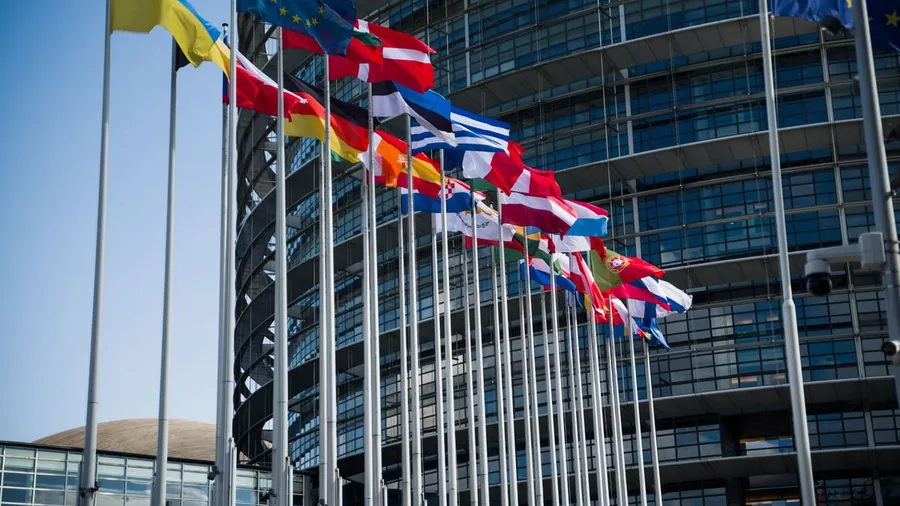
The European Union’s Markets in Crypto-Assets Regulation is no longer a proposal, a draft, or a future deadline. It is law, it applies, and firms across the bloc are operating under it. What is less widely understood is that MiCA is still mid-rollout: the regulation reached full application at the end of 2024, but the machinery around it (registers, supervisory IT systems, national penalty regimes) has been coming into place across a transitional phase that runs to roughly mid-2026.
Two dates that define the framework
MiCA entered into force in June 2023. That date mattered legally but changed very little operationally, because entry into force starts the clock rather than the obligations. Full application arrived in December 2024, and that is the point from which MiCA’s substantive requirements (authorisation, disclosure, conduct rules) became binding on the firms in scope.
The gap between those two dates was deliberate. It gave national authorities time to build supervisory capacity and gave issuers and service providers time to restructure toward a regime that, for many of them, replaced a patchwork of national crypto rules with a single EU-wide one.
The transitional phase and the Interim MiCA Register
Full application did not mean the transition was over. The EU has been working through a transitional phase extending through approximately mid-2026, during which the supervisory infrastructure is still being consolidated.
The clearest illustration of that is the Interim MiCA Register. It was established by December 30, 2024 and is updated weekly, and it exists precisely because the permanent infrastructure was not ready at the moment the rules took effect. The register is targeted for integration into ESMA’s formal IT systems by mid-2026, at which point what is currently an interim, manually maintained list becomes part of the authority’s standing systems. Until then, the interim register is the reference point for who is authorised and, importantly, for tracking entities found to be non-compliant.
What MiCA replaced
Before MiCA, a crypto firm operating across the European Union faced a patchwork of national regimes rather than a single rulebook. Some Member States had built bespoke crypto-asset frameworks, others relied on general financial services or anti-money laundering law stretched to cover digital assets, and a handful had essentially no dedicated regime at all. That meant a firm seeking to operate across the bloc could face materially different licensing, disclosure and conduct requirements from one country to the next, and a firm authorised in one Member State had no guarantee that authorisation would be recognised in another. MiCA’s central structural achievement is the passporting mechanism this replaced that patchwork with: a firm authorised as a crypto-asset service provider in one Member State can, subject to notification requirements, offer its services across the entire EU without seeking separate authorisation in each country, which is the same passporting logic that already underpins other EU financial services regimes such as those covering investment firms and payment institutions.
EMT and ART: MiCA’s two stablecoin categories
MiCA does not use the word “stablecoin” as a legal category. It splits that territory into two: e-money tokens, which reference a single official currency, and asset-referenced tokens, which reference some other value or basket. Issuers in both categories must comply with authorisation and transparency requirements, and each token type carries its own separate white paper requirement rather than a single generic disclosure document.
The responsibility question is settled unusually clearly in MiCA. Under the regulation, the offeror and/or issuer of a crypto-asset is solely responsible for the content of each crypto-asset white paper. There is no shared liability with a regulator that reviewed it, and no implicit endorsement conferred by publication. For anyone reading a white paper for a MiCA-regulated token, that is the crucial framing: the document is the issuer’s statement, and the issuer owns it.
Disclosures become machine-readable
A quieter but structurally significant change took effect on December 23, 2025, when crypto-asset white papers became subject to a requirement to be formatted using iXBRL, or Inline eXtensible Business Reporting Language. iXBRL is the same family of structured reporting format already familiar from EU financial reporting, and it means white paper content can be parsed by machines rather than only read by people. In practice this makes supervisory comparison across issuers considerably easier, and it moves crypto disclosure closer to the tooling that already surrounds traditional securities filings.
Penalties and complaints sit with national authorities
MiCA is an EU regulation, but enforcement runs through Member States. Each was required to notify its framework for administrative penalties to the European Commission and ESMA by June 30, 2025, so that the sanctions available for a MiCA breach are documented at EU level even though they are set nationally.
Alongside that, competent national authorities must maintain complaints-handling procedures, giving consumers and market participants a defined route to raise concerns about a regulated firm. Entities that fall short are tracked in the Interim MiCA Register, which functions as both a positive list of authorised firms and a record of non-compliance.
Reserve and redemption requirements for stablecoin issuers
Beyond the authorisation and white paper requirements, MiCA imposes ongoing obligations on e-money token and asset-referenced token issuers that are designed to prevent a repeat of the kind of stablecoin failures seen elsewhere in the crypto industry. Issuers must hold reserve assets that match the value of tokens in circulation, keep those reserves segregated from the issuer’s own funds and, in most cases, held with regulated custodians, and provide holders with a right to redeem their tokens at par value at any time. Large issuers, those exceeding certain thresholds for the number of holders or transaction volume, face additional requirements, including caps on the volume of transactions a non-euro-denominated token can process within the bloc, a provision aimed squarely at preventing a widely used foreign-currency stablecoin from displacing the euro in everyday European payments.
How MiCA compares to the US approach
The contrast with the United States, which took a separate legislative path to stablecoin regulation through the GENIUS Act, signed in July 2025, is instructive. Both regimes converge on the same basic principle, that a stablecoin should be backed by high-quality, liquid reserves and that issuers should be subject to ongoing supervision, but they differ in scope and structure. MiCA is a single, directly applicable EU regulation covering the full range of crypto-assets and service providers, not just stablecoins, whereas the US framework is narrower, focused specifically on payment stablecoins, and layered on top of an existing, fragmented system of state and federal financial regulation. For firms operating on both sides of the Atlantic, the practical effect is that MiCA compliance does not automatically satisfy US requirements, or vice versa, and firms serving both markets are generally maintaining separate compliance programs tailored to each regime’s specific reserve, disclosure and licensing rules.
What the current phase actually means
For anyone dealing with EU-regulated crypto services in 2026, the practical picture is a regime that is binding but still settling. The rules apply in full; the registers and supervisory systems behind them are mid-migration. Checking a firm’s status means consulting the interim register as it stands today, with the understanding that the authoritative home for that data is scheduled to change once ESMA completes the integration.